A Structural Theory of Corporate Finance
A Recursive Framework Linking Capital, Return, Income, Cash Flow, Value, Stability, and Financial Evolution
Synopsis & Overview
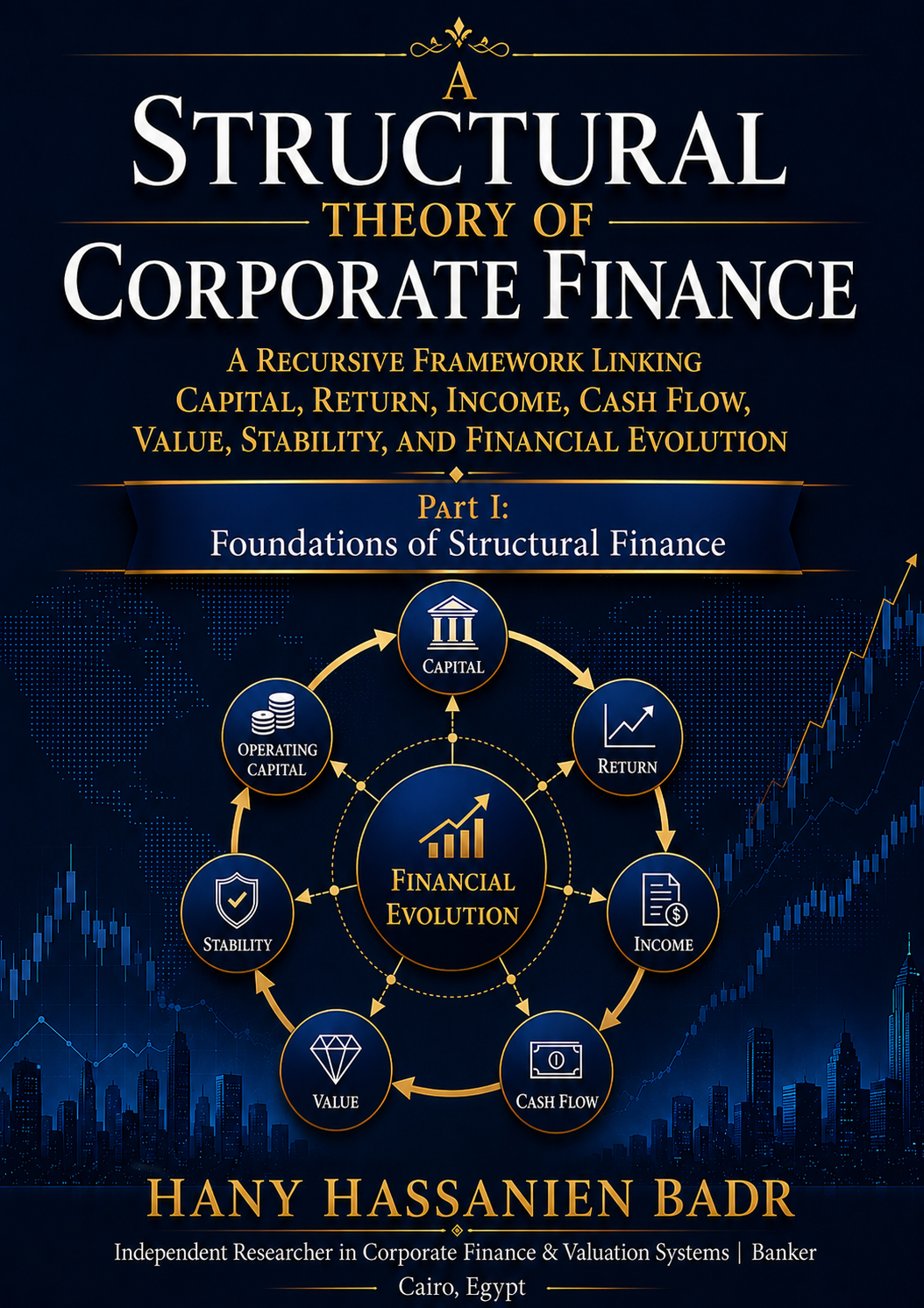
A Structural Theory of Corporate Finance introduces an integrative, systems-oriented framework that moves corporate finance away from fragmented, static single-period analyses and toward a dynamic, recursive operating-state architecture.
The author argues that modern finance is plagued by a "fragmentation problem," where valuation models, accounting systems, capital structure optimization, and risk management operate in silos as independent territories. This book bridges those gaps by positioning the corporation as an evolving productive-capital organism. Through a series of foundational mathematical identities, it demonstrates how today's operating and reinvestment decisions recursively propagate to build tomorrow's capital quality, long-duration stability, and ultimate corporate value.
Interactive Table of Contents
Select any chapter below to jump directly to that section within the integrated reader.
- INTRODUCTION Open
- CHAPTER 1: THE FRAGMENTATION PROBLEM IN CORPORATE FINANCE Open
- CHAPTER 2: FROM VALUATION METHODOLOGY TO STRUCTURAL FINANCE Open
- CHAPTER 3: THE CORPORATION AS A RECURSIVE OPERATING-STATE SYSTEM Open
- CHAPTER 4: CAPITAL AS THE FUNDAMENTAL STATE VARIABLE Open
- CHAPTER 5: RECURSIVE CAPITAL DYNAMICS Open
- CHAPTER 6: RETURN AS A TRANSFORMATION MECHANISM Open
- CHAPTER 7: REINVESTMENT AND PRODUCTIVE PROPAGATION Open
- CHAPTER 8: CASH FLOW AS A RESIDUAL STRUCTURAL OUTPUT Open
- CHAPTER 9: DISCOUNTING AS REPRESENTATION RATHER THAN CREATION Open
- CHAPTER 10: FROM OPERATING INCOME TO NET INCOME Open
- CHAPTER 11: EQUITY, LEVERAGE, AND RECURSIVE FINANCIAL STRUCTURE Open
- CHAPTER 12: SPREAD DYNAMICS AND STRUCTURAL VALUE CREATION Open
- CHAPTER 13: MULTI-PATH VALUATION CONVERGENCE Open
- CHAPTER 14: TERMINAL VALUE AND LONG-DURATION FINANCIAL CONTINUITY Open
- CHAPTER 15: STRUCTURAL STABILITY AND RECURSIVE FINANCIAL COHERENCE Open
- CHAPTER 16: RECURSIVE INSTABILITY AND FINANCIAL DESTABILIZATION Open
- CHAPTER 17: GOVERNANCE, STRATEGIC DISCIPLINE, AND RECURSIVE FINANCIAL OVERSIGHT Open
- CHAPTER 18: BANKING, INVESTMENT ANALYSIS, AND THE FUTURE OF FINANCIAL ARCHITECTURE Open
- CHAPTER 19: TOWARD A UNIFIED STRUCTURAL THEORY OF CORPORATE FINANCE Open
- EPILOGUE: CLOSING REFLECTION Open
- EPILOGUE: THE FUTURE OF STRUCTURAL FINANCE Open
- APPENDIX A: FOUNDATIONAL STRUCTURAL IDENTITIES Open
- APPENDIX B: CONCEPTUAL FOUNDATIONS OF STRUCTURAL FINANCE Open
- APPENDIX C: STRUCTURAL INTERPRETATION OF CORPORATE FINANCIAL SYSTEMS Open
- APPENDIX D: THEORETICAL IMPLICATIONS AND FUTURE RESEARCH AGENDA Open
- APPENDIX E: STRUCTURAL PRINCIPLES OF LONG-DURATION VALUE CREATION Open
- APPENDIX F: RECURSIVE INTERPRETATION OF FINANCIAL RATIOS AND PERFORMANCE METRICS Open
Read Full eBook Online
Read the complete manuscript directly within your browser below. Use the navigation controls to browse pages, or click any chapter in the Table of Contents above to jump to that section. Click here to download if you prefer.
How to Cite this eBook
Badr, H. H. (2026). A Structural Theory of Corporate Finance: A Recursive Framework Linking Capital, Return, Income, Cash Flow, Value, Stability, and Financial Evolution. Journal of Economic Development & Global Markets.
© 2026 by Hany Hassanien Badr
All rights reserved. No part of this publication may be reproduced,
distributed, or transmitted in any form without prior written permission.